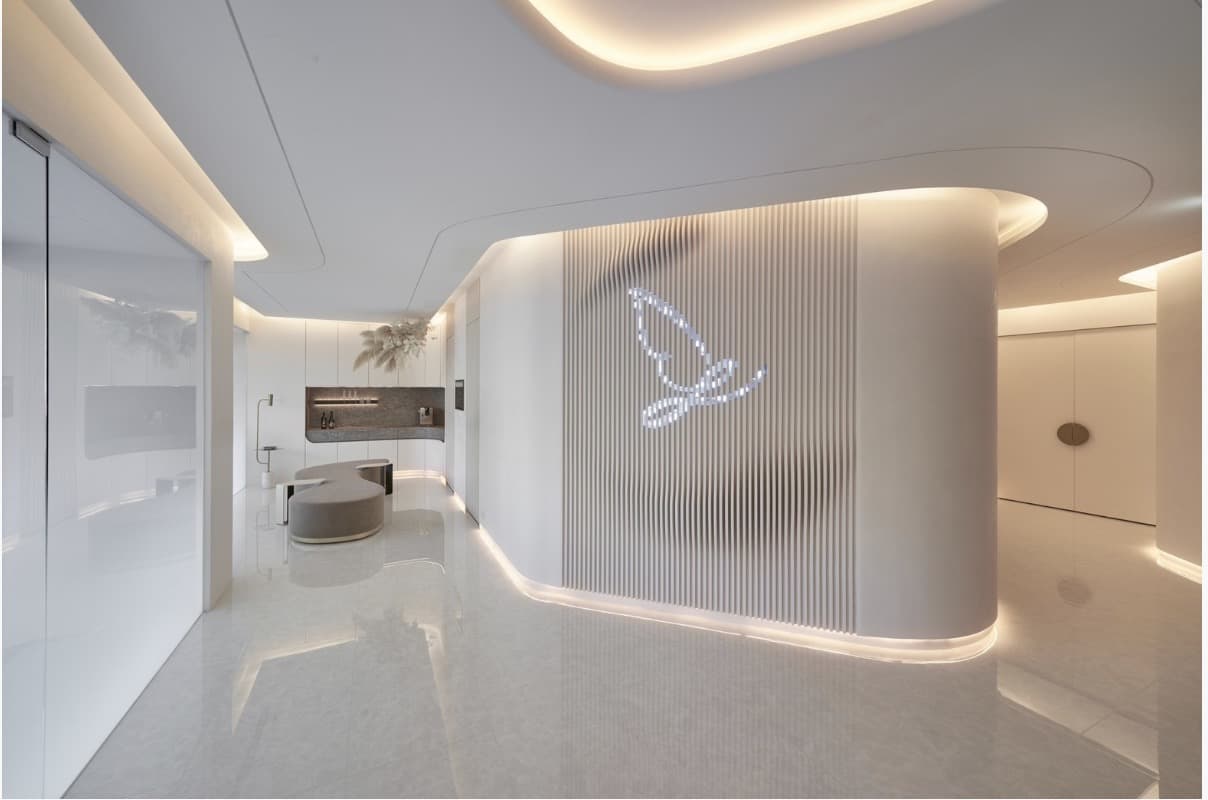
2025 Scientific Anti-Aging Trend: Activating Your Regenerative Power
Dr. Hsieh Chi-Ying of Crystal Aesthetics Clinic shares insights on the "Reverse Clock" treatment and AI-powered skin analysis for personalized anti-aging strategies.
"Medical aesthetics isn't about changing your face overnight — it's about awakening the skin's self-healing ability and returning to your best state."
— This is the philosophy Dr. Hsieh Chi-Ying of Crystal Aesthetics Clinic most often shares with her patients.
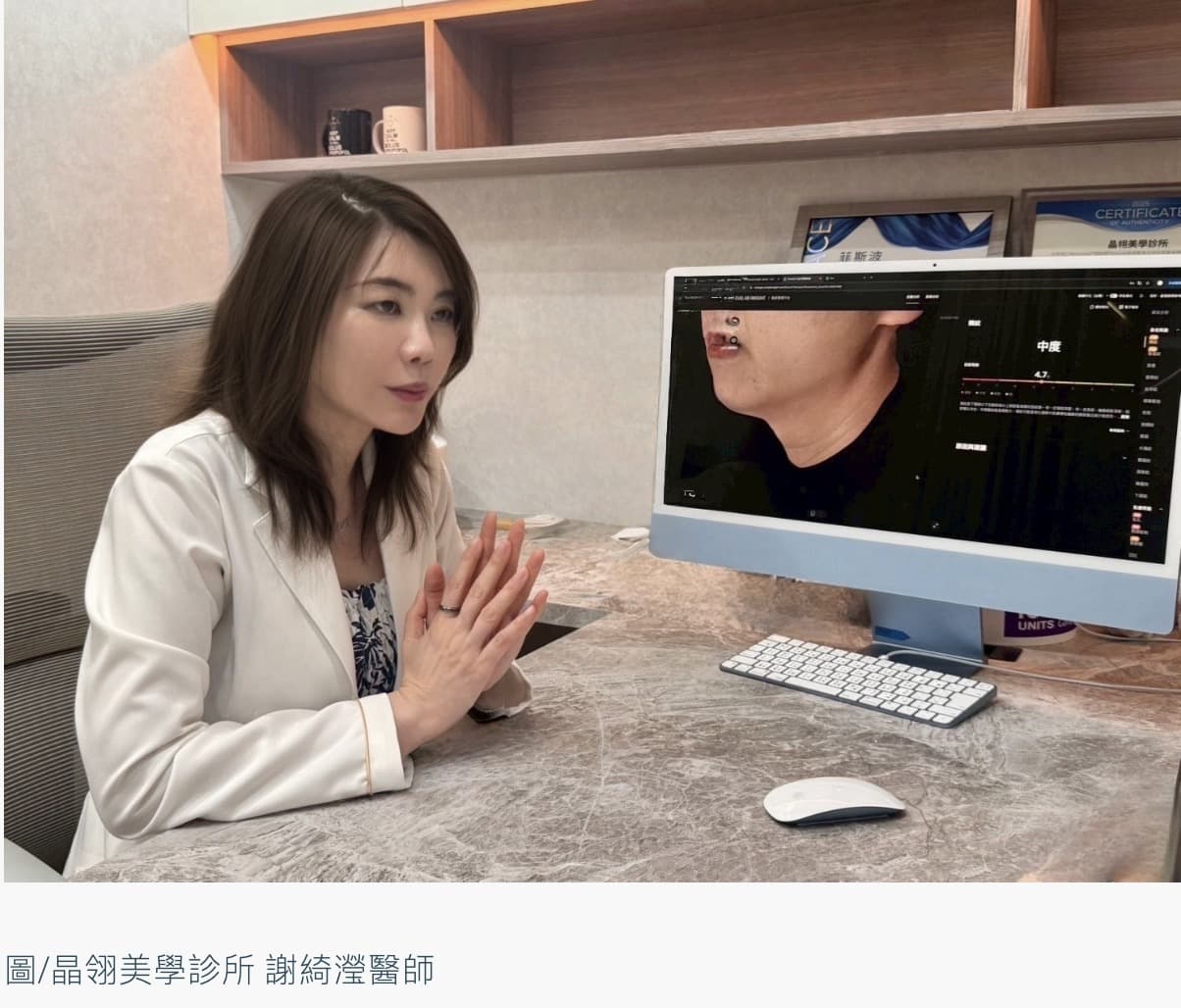
In recent years, the treatment nicknamed "Reverse Clock" (Profhilo) has gained popularity. With no surgery required and virtually no downtime, it has become a preferred option for those seeking natural skin rejuvenation. But what exactly is the "Reverse Clock" treatment?
What Is the "Reverse Clock" Treatment?
The "Reverse Clock" treatment refers to a hyaluronic acid (HA) therapy. Unlike traditional single-point HA fillers that focus on volumizing specific areas, Dr. Hsieh explains that this is not about filling individual lines. Its core technology lies in the use of high-concentration, high-flow dual hyaluronic acid (HA). Through precisely mapped 5×5 injection points across the face and neck, the formula is delivered into the dermis to stimulate collagen and elastin production, thereby activating the skin's deep regenerative and self-repair mechanisms.
AI Aesthetic Analysis: Moving Beyond Subjective Evaluation
Dr. Hsieh emphasizes that this treatment is not just "a single injection," but a way to help the skin regain its natural repair rhythm. It is particularly suitable for early signs of aging and noticeable collagen loss. Concerns such as dryness, enlarged pores, dullness, and laxity can be improved gradually and naturally. With almost no recovery period, many patients even complete the procedure during their lunch break as part of a light skin maintenance plan.
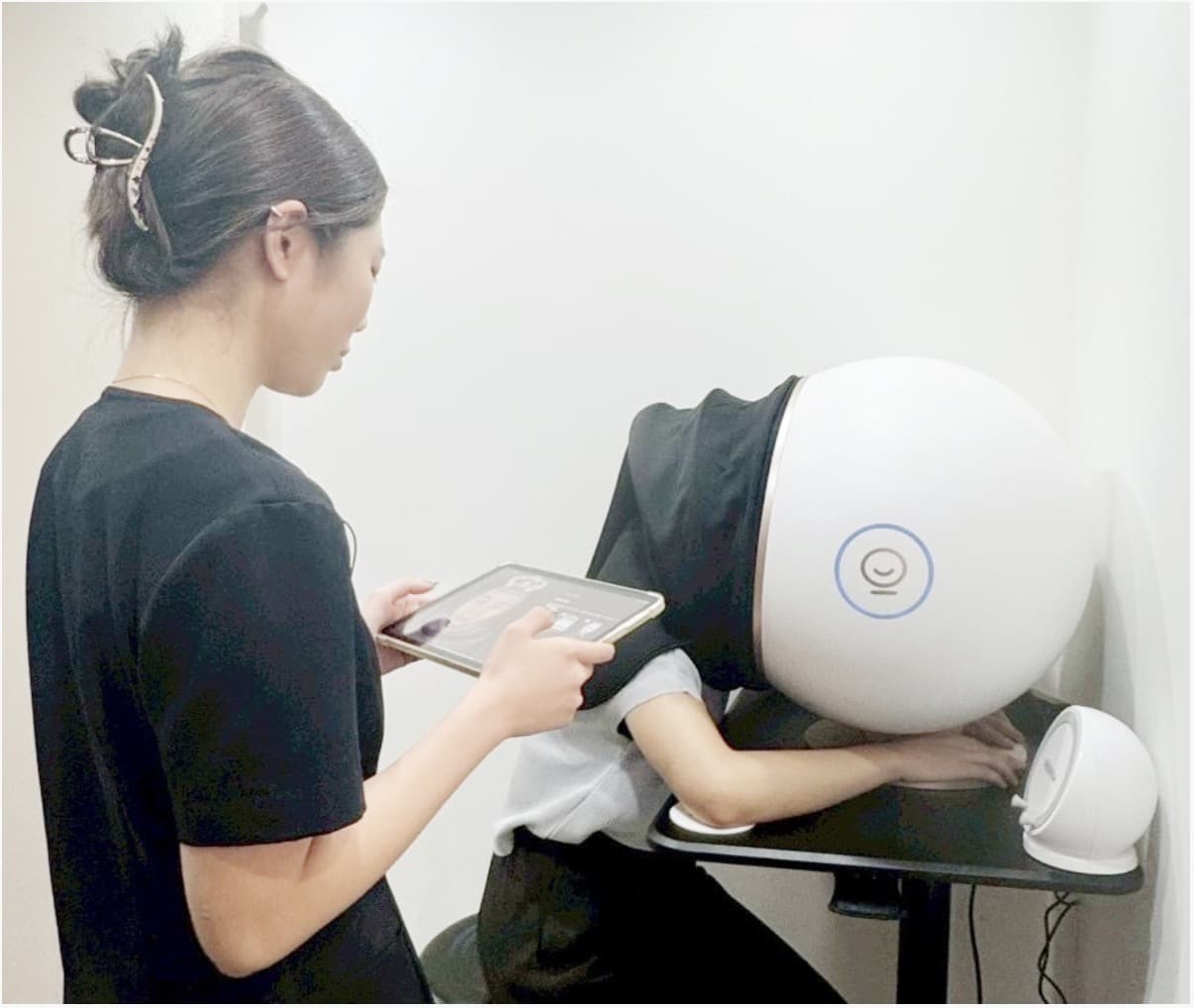
Beyond advancements in treatment technology, Dr. Hsieh highlights the importance of pre-treatment skin analysis. Traditionally, aesthetic assessments relied heavily on physicians' visual judgment and patients' subjective descriptions. Now, with AI-powered evaluation — the Evelab MUSE Skin Detection System — clinics can obtain comprehensive quantitative data, including skin tone uniformity, pore condition, texture, redness ratio, firmness, and even facial proportion analysis (Three Courts and Five Eyes). It is not merely detection, but precise aesthetic analysis.
According to Dr. Hsieh, the system evaluates indicators such as skin stability and sensitivity risk to help determine whether a patient is suitable for immediate treatment or should first undergo restorative care. For example, a patient's skin may appear stable to the naked eye, yet MUSE may detect a high redness ratio, indicating potential sensitivity. Proceeding directly with injections could cause adverse reactions or suboptimal results. In such cases, stabilizing the skin first leads to better outcomes and higher patient satisfaction.
Neck Lines as an Early Aging Signal: Targeted Regional Treatment
The "Reverse Clock" treatment is not limited to the face; it can also be applied to the neck and other body areas for texture improvement. Dr. Hsieh shares the case of a 33-year-old flight attendant. AI assessment indicated her facial skin age was 31 — overall in good condition — but she was concerned about enlarged pores, dryness, and neck lines. AI analysis revealed moderate firmness decline in the neck compared to the face, so the treatment plan prioritized the neck area.
Dr. Hsieh explains that treatment plans are typically designed in three stages: Awakening, Activation, and Maintenance. In this case, initial improvements were visible within about 10 days, while more comprehensive and natural skin remodeling became apparent after 2–3 months.
"Injection points and dosage are tailored according to skin age and condition. Younger skin may focus on foundational repair, while mature skin may combine treatments such as ultrasound or intense pulsed light (IPL) to optimize both deeper structures and surface texture simultaneously."
The Era of Data-Driven Medical Aesthetics
The combination of the "Reverse Clock" treatment and MUSE analysis also makes treatment tracking more tangible. Dr. Hsieh notes that changes in skin tone uniformity, redness ratio, and firmness are monitored through the device, with image and data reports provided to patients. This data-backed communication reduces expectation gaps and builds stronger trust.
Many patients respond positively to this scientific, structured approach. Seeing their scores improve from "below average" to "above average" in objective reports often motivates them to commit more actively to treatment plans and daily skincare routines.
"Medical aesthetics isn't about quick transformation; it's about restoring youthful vitality at the cellular level," Dr. Hsieh emphasizes. The skin consists of five structural layers — epidermis, superficial fat, muscle, ligaments, and periosteum — and aging begins with volume and structural loss across each layer. The "Reverse Clock" treatment aims to initiate reconstruction at the source.
With MUSE supporting long-term anti-aging strategies, treatments evolve from short-term stimulation to a new model of "Precision Medicine × Personalized Planning." The future of medical aesthetics is no longer solely guided by touch and experience, but by the integration of technology and human-centered care. At Crystal Aesthetics Clinic, this vision is already being put into practice.