EVE MUSE Smart Detection Combined with Derma Microneedling for Precise Improvement of Acne Scars and Pores
Dr. Chen Wei-Yu explains how EVE MUSE Smart Skin Detection System combined with Dermapen microneedling provides precise, personalized treatment for acne scars and enlarged pores.
Acne scars and enlarged pores are among the most common skin concerns — yet they are rarely resolved "in one go." Dr. Chen Wei-Yu, Associate Director of Yafeng Zhubei Clinic, explains that traditional approaches such as laser treatments, resurfacing, or topical acids may sometimes be limited by penetration depth or overly broad tissue impact, making long-term improvement of deep atrophic scars or enlarged pores less than ideal.
He notes that in younger individuals, enlarged pores are often related to excess sebum production or genetic factors, while in more mature patients, they are commonly associated with collagen loss or UV-induced aging. As for acne scar treatment, outcomes depend on scar type, but the overarching principle remains the same: stimulating collagen regeneration. Therefore, identifying the root cause and designing a personalized treatment plan has become a key clinical trend in the pursuit of refined skin texture.
What Is Dermapen? A Personalized Collagen-Inducing Therapy
As aesthetic medicine shifts toward personalized treatment, Dermapen microneedling has become an increasingly common clinical option.
Dr. Chen explains that this technique uses vertically oscillating, adjustable microneedles to create uniform microchannels in the dermis. Unlike energy-based treatments, it relies on physical stimulation rather than thermal energy, activating the skin's natural wound-healing response and promoting collagen and elastin regeneration.
Compared with energy-based treatments such as lasers or radiofrequency microneedling, Dermapen does not deliver heat, which means:
• Lower risk of post-inflammatory hyperpigmentation (PIH) • Shorter downtime • Fewer skin tone limitations
During treatment, needle depth and speed can be finely adjusted according to individual skin condition and scar severity — from superficial improvement of pores and fine lines to mid- and deep-layer repair of depressed acne scars. Regenerative serums or growth factors may also be infused simultaneously to enhance overall recovery outcomes.
For shallow textural irregularities and mild depressions, microneedling provides uniform stimulation. For deeper scars, extended subcision time or combination therapies — such as targeted injections — may be necessary.
Dr. Chen adds that older approaches such as directly "filling" acne scars with hyaluronic acid or autologous fat may yield inconsistent results, as scar tissue tends to be dense and fibrotic, potentially leading to displacement or uneven absorption over time. In contrast, dermal grafting — under appropriate conditions — may offer better tissue integration and longer-lasting, more natural improvement.
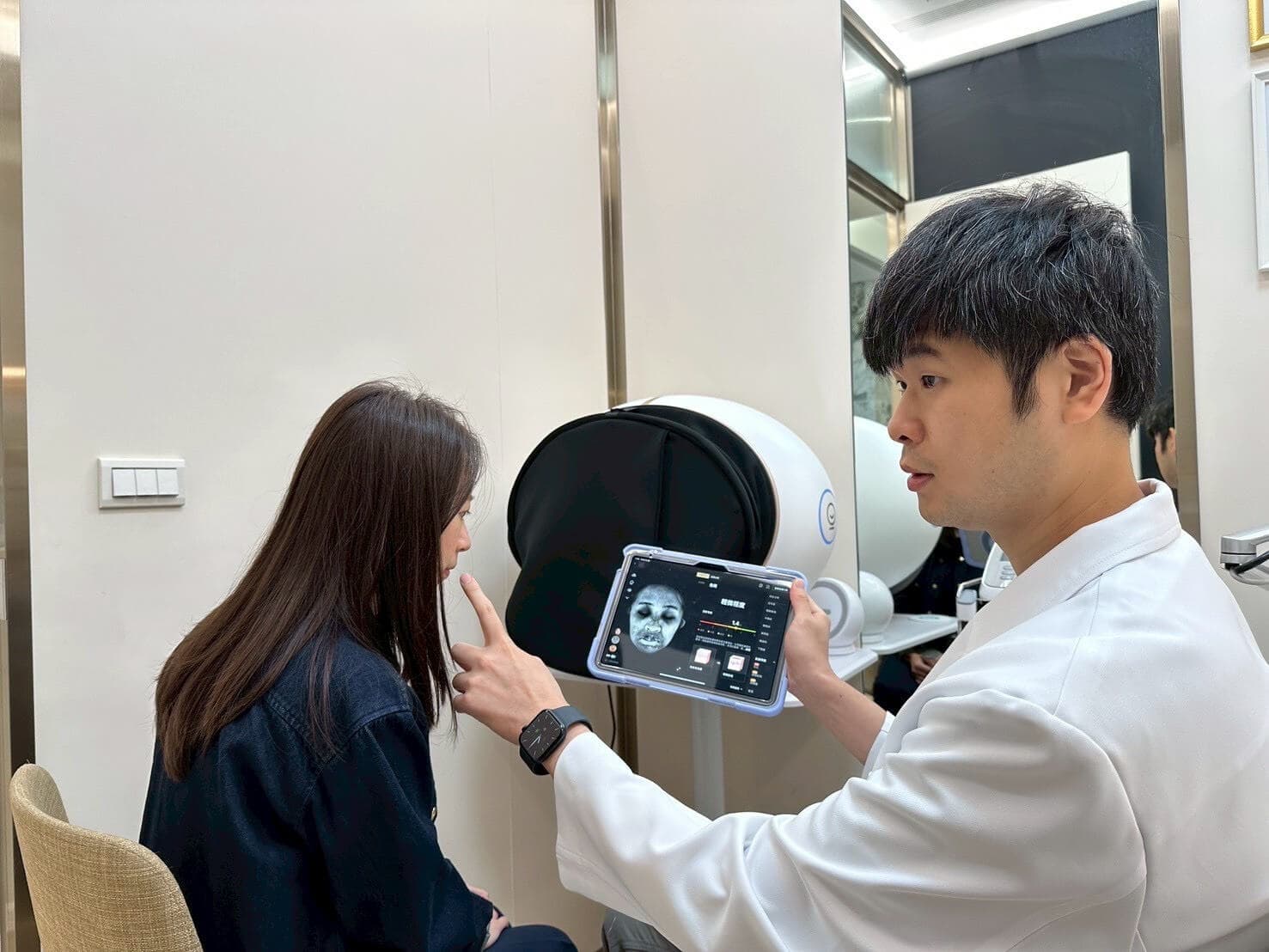
Why Smart Skin Detection Matters: Making Skin Conditions Visible
In the past, relying solely on visual inspection and palpation made it difficult to accurately assess acne scar status, pore distribution, or overall skin condition. Evaluations were easily influenced by lighting, angles, and photography conditions, leading to inconsistent judgments.
Today, the Eve Lab MUSE Smart Skin Detection System provides a more objective basis for assessment.
Dr. Chen explains that this advanced system utilizes multispectral imaging and AI analysis under standardized lighting and positioning. It quantifies multiple indicators, including:
• Redness levels • Pigmentation • Pore density • Skin texture uniformity
This creates a comprehensive, standardized skin profile. The system not only helps physicians identify overlooked concerns — such as sensitivity, imbalance between oil and hydration, or early laxity — but also enables more comprehensive treatment planning.
Unlike traditional photo comparisons, which may vary due to external conditions, AI-based assessments ensure consistent before-and-after comparisons, reducing discrepancies caused by subjective perception.
For example, some acne scar patients may feel their improvement is limited, yet AI data may show a measurable reduction in scar count, decreased pore visibility, and improved redness concentration — reinforcing confidence to continue treatment.
In some cases, what appears to be enlarged pores may actually stem from overactive sebaceous glands. AI analysis helps refine the strategy and avoid overtreatment.
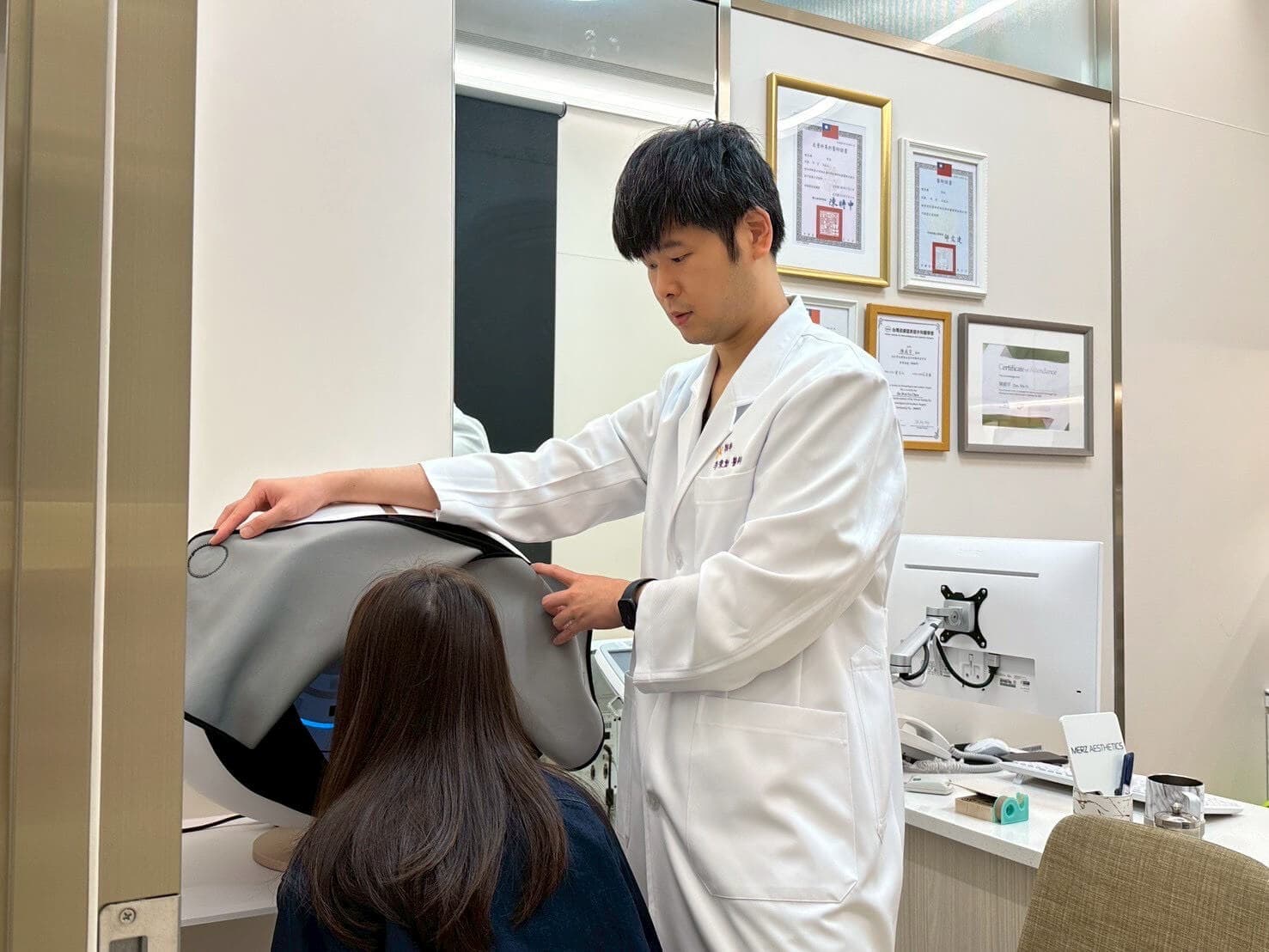
Precision Tracking: Letting Data Speak
In clinical follow-up, Eve Lab MUSE enables before-and-after comparisons of acne scar count, pore density, and overall skin uniformity.
Dr. Chen generally recommends reassessment after completing a full treatment course (typically three sessions). If patients are concerned about potential hyperpigmentation or darkening, AI detection can quickly determine whether the issue stems from treatment response or external factors such as sun exposure or lifestyle changes.
He emphasizes that AI detection is a valuable supportive tool for physicians — assisting in analysis and outcome tracking — but it does not replace clinical expertise. The machine provides objective data, while the physician interprets and makes informed decisions.
When technology and medical judgment work together, treatments become safer, more consistent, and more precisely tailored to each individual.