AI Beauty Tech - Full Guide to Beauty Tech Innovations in 2026
Discover the latest beauty technology, from AI-powered skincare to personalized beauty solutions, and learn how technology is reshaping the beauty industry.

What is Beauty Technology
With many major companies operating in this space, this growth signals that beauty tech is quickly transforming how beauty brands, aesthetic clinics and salons, interact with consumers to deliver personalized treatments and potentially more successful results.
Latest Beauty Technology Trends
As the industry evolves, so do the technologies driving it. Here are the top beauty technology trends shaping 2026 and beyond:
- Personalised Skincare Solutions
- Evidence-Based AI Skin Diagnostics
- AI-Driven Beauty Chatbots and Virtual Assistants
- Customised Beauty Products
- AI-Enhanced Beauty Devices
- Open Digital Skin Science Ecosystems
Personalized Skincare Solutions
Personalized Product Recommendations
Evidence-Based AI Skin Diagnostics
This elevation from 'beauty tool' to 'clinical instrument' is one of the most significant developments in the industry. EveLab Insight has earned the INNOCOS Wellness & Longevity CHOICE Award for Skin Diagnostic Technology and the Beauty Matter Next Award for Best Breakthrough Technology - underscoring that the gap between consumer beauty and clinical science is closing fast.
AI-Driven Beauty Chatbots and Virtual Assistants
In the past, accessing personalised skincare advice often required appointments and in-clinic consultations. Now, AI-driven beauty chatbots and virtual assistants provide 24/7 support and personalised recommendations directly to consumers.
A chatbot can guide a user through a skin analysis, answer questions about products, and even schedule virtual consultations. In 2026, these systems are increasingly integrated with diagnostic data - so the chatbot's advice is grounded in a user's actual, measured skin profile rather than self-reported concerns.
Customized Beauty Products
Traditionally, finding the perfect shade of foundation or ideal skincare formulation was a frustrating, trial-and-error process. Beauty technology now enables truly customised products tailored to individual needs. AI algorithms analyse skin tone, type, and specific measured concerns to inform custom-blended foundations or personalised skincare serums. As diagnostics become more precise, the resulting product customisation follows suit - reducing waste and improving consumer satisfaction.
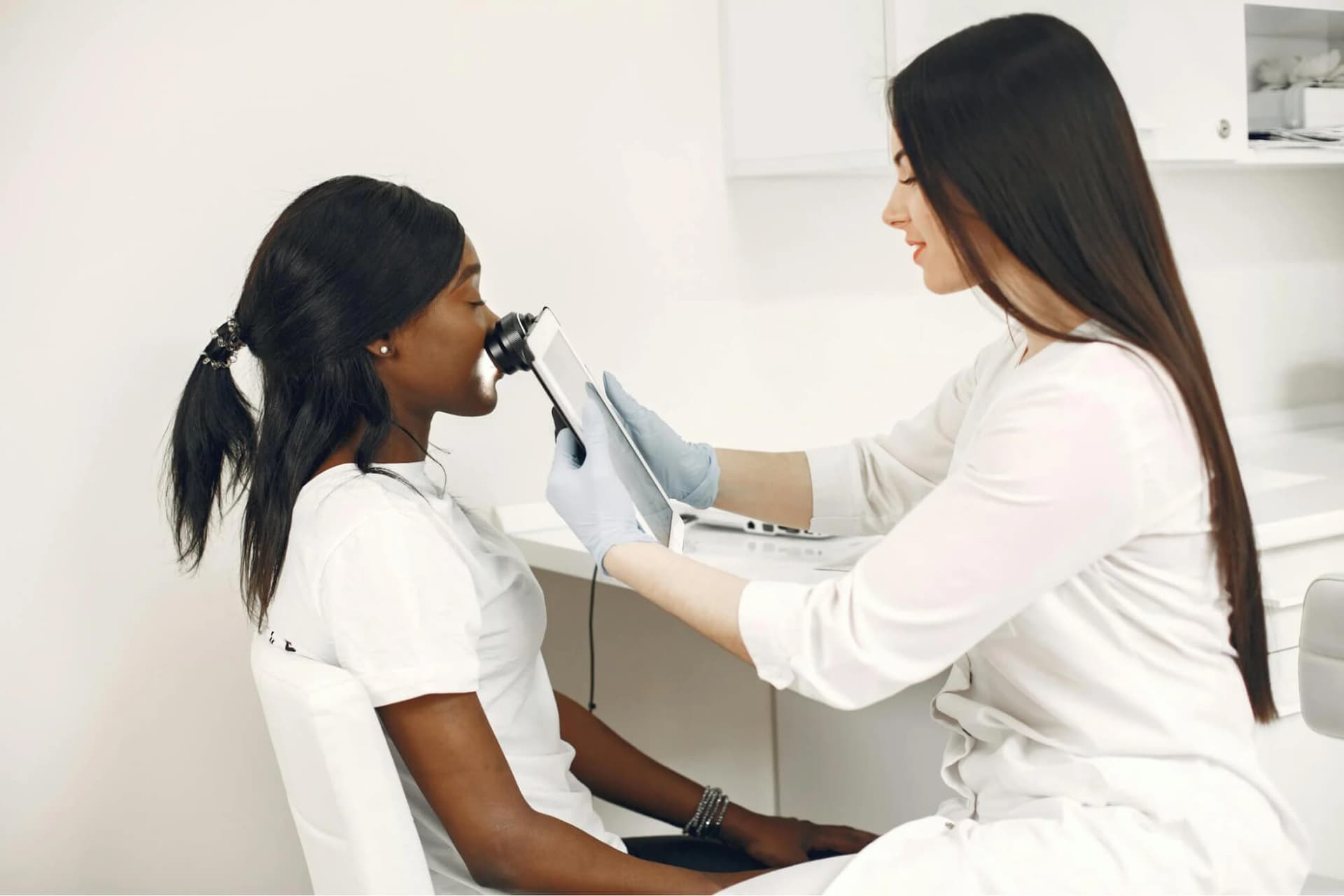
AI-Enhanced Beauty Devices
How Does Beauty Technology Work
Beauty technology has transformed the way businesses approach skin health. Here are the technologies that the latest solutions employ:
AI and Machine Learning Algorithms
With repeated use of digital skin analysis, AI models identify patterns and trends across a diverse range of faces and skin types. Machine learning correlates this data continuously, enabling beauty technicians and clinics to develop evidence-based solutions for common skin concerns. First-place finishes at international AI competitions - including ECCV PIRM Image Enhancement and ISIC Skin Lesion Segmentation - demonstrate the algorithmic rigour underpinning the best platforms in this space.
Virtual Reality and Augmented Reality
Computer vision and AR have fundamentally changed beauty technology. Diagnostic machines now produce HD 3D Skin Contour Maps capable of identifying a broad spectrum of skin conditions - from surface-level pores and spots to deeper structural ageing markers like tear trough and periocular lines. AR layers allow consumers to visualise potential outcomes before committing to products or treatments, reducing friction in the purchase journey.
Smart Devices and IoT in Beauty Services
Data Analytics for Customer Insights
Bring Your Business to the Next Level with Beauty Technology
- Brands - Maximise sales with AI-powered consultations that bridge clinical data and consumer trust. Clients report up to +70% average order value (AOV) when AI diagnostics are integrated into the consultation journey.
- Aesthetic Clinics - Elevate consultations through a data-driven aesthetic lens. Objective measurements of facial proportions, angles, and contours enhance client communication and treatment planning, helping practitioners demonstrate outcomes with precision.
- Beauty Salons - Secure instant bookings with standardised AI insights. Empower staff to deliver expert recommendations that drive revenue while minimising training time and operational costs.
Frequently Asked Questions About Beauty Tech Solutions
What is beauty technology?
Technology in the beauty industry encompasses all innovative applications of tech - from AI-powered skin analysis and personalised product recommendations to virtual makeup try-on tools and smart beauty devices. In 2026, it also includes evidence-based diagnostics that quantify skin health with clinical-grade precision, representing a significant evolution in how consumers interact with beauty brands and how brands deliver measurable, personalised experiences.
How is AI transforming personalized skincare in 2026?
AI is revolutionising personalised skincare by enabling true, evidence-based hyper-personalisation. Advanced AI beauty tech now analyses high-resolution skin imagery to quantify ageing and surface-level concerns on objective, standardised scales - going far beyond self-reported skin types. This clinical rigour empowers consumers with actionable insights and gives practitioners and brands the credibility to back up their recommendations with data.
How are beauty brands leveraging AI to enhance customer engagement?
Beauty brands are leveraging AI in multiple ways: AI-powered diagnostic consultations that surface objective skin data, virtual try-on tools that let customers explore products before purchase, personalised chatbot assistants available 24/7, and targeted campaigns built on aggregated skin health insights. Brands using AI-powered consultations are also seeing significant commercial uplift - with some reporting up to 70% higher average order values compared to traditional consultation methods.
How do beauty tech solutions ensure the privacy and security of my data?
Using robust security measures - including tiered online authorisation and secure data management - leading beauty tech solutions protect all user information. Systems are built to comply with relevant data protection regulations, ensuring that data access is carefully controlled and managed to safeguard customer trust. As open digital ecosystems become more prevalent, interoperability standards are evolving to maintain these protections across connected platforms.
What are the challenges for beauty industries?
Despite exciting advancements, the industry still faces several challenges. Data privacy and security remain a priority as ecosystems become more interconnected. Ensuring the accuracy and reliability of AI-powered diagnostic tools is critical - which is why clinical validation, such as peer-reviewed research presented at events like SID 2026, is increasingly important for differentiating credible platforms. Bridging the gap between online and offline experiences, and integrating new technologies seamlessly into existing workflows, also remain key operational challenges for brands and clinics.
What is an open digital ecosystem in beauty tech?
An open digital ecosystem in beauty tech refers to a unified infrastructure allowing different hardware devices, AI algorithms, and software platforms to communicate and share data seamlessly. Rather than proprietary, closed systems, an open ecosystem enables global interoperability - so a diagnostic device in a clinic can feed data into a brand's CRM, an e-commerce personalisation engine, or a practitioner's treatment planning software. EveLab Insight launched its open digital ecosystem in 2026 to accelerate the future of skin science.